
The 1919 Black Sox Scandal
How eight Chicago White Sox players conspired with gamblers to lose the 1919 World Series, why they were acquitted and still banned from baseball for life.

How Enron went from Fortune’s most innovative company to bankruptcy in 2001: the accounting tricks, the hidden debt, the collapse and the trials that followed.
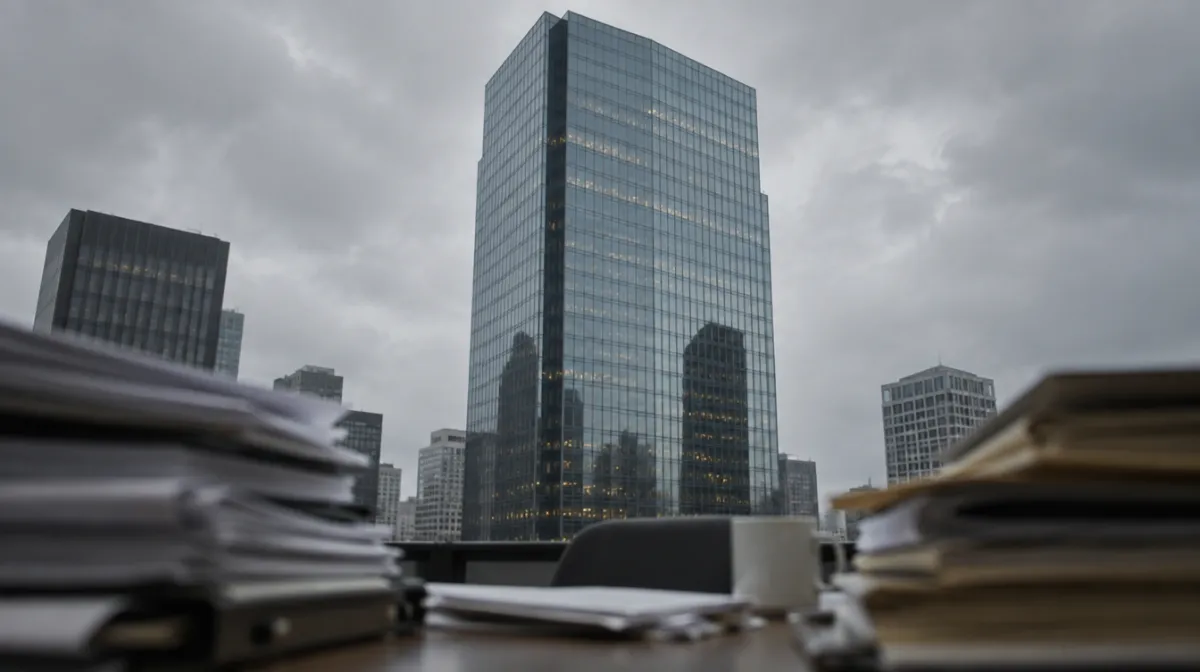
In 2000, Enron was one of the most admired companies in America. The Houston energy firm reported revenues of over $100 billion, and Fortune magazine had named it “America’s Most Innovative Company” six years running. Just over a year later, it was bankrupt. The Enron scandal became a byword for corporate fraud, and it changed how public companies are audited.
Enron was formed in 1985 through the merger of two natural gas pipeline companies, with Kenneth Lay as chief executive. In the 1990s, led increasingly by Jeffrey Skilling, it transformed itself into a trading business, buying and selling natural gas, electricity and later more exotic products such as broadband capacity and weather derivatives.
Two techniques were central:
| Date | Event |
|---|---|
| August 2001 | Skilling resigns as CEO after six months; employee Sherron Watkins warns Lay of an accounting scandal |
| October 16, 2001 | Enron reports a large quarterly loss and a $1.2 billion cut in shareholder equity |
| October 22, 2001 | The SEC opens an inquiry |
| November 8, 2001 | Enron restates its earnings going back to 1997 |
| November 28, 2001 | A planned rescue merger with rival Dynegy collapses |
| December 2, 2001 | Enron files for bankruptcy |
Its shares, worth around $90 in 2000, fell below $1. Thousands of employees lost their jobs, and many lost retirement savings invested heavily in Enron stock.
Enron’s auditor, Arthur Andersen, one of the “Big Five” accounting firms, had shredded Enron-related documents. It was convicted of obstruction of justice in 2002. The Supreme Court overturned the conviction in 2005, but by then the firm had effectively ceased to exist.
Fastow pleaded guilty in 2004 and cooperated with prosecutors. In 2006, a jury convicted Lay and Skilling of fraud and conspiracy. Lay died of a heart attack before sentencing, so his conviction was vacated. Skilling was sentenced to 24 years, later reduced; he was released in 2019.
The scandal, followed quickly by the collapse of WorldCom, led Congress to pass the Sarbanes-Oxley Act of 2002. It requires executives to certify their company’s financial statements, strengthens auditor independence and created a new body to oversee auditors.
Enron remains a case study in how a charismatic story, complex finance and weak oversight can hide a failing business, a pattern that echoes in later collapses such as Theranos. For an older example of investors caught up in a frenzy, see tulip mania.
Yes. Several executives were convicted or pleaded guilty, including Fastow and Skilling. Lay’s conviction was vacated after his death.
It was the largest in US history at the time. WorldCom’s bankruptcy in 2002 was bigger, and later failures, such as Lehman Brothers in 2008, dwarfed both.
During the 2000–01 crisis, Enron traders used strategies that exploited California’s electricity market. Internal memos describing them later became evidence of market manipulation.

Every article is edited by a human and checked against our editorial policy. Spotted a mistake? Tell us.
How eight Chicago White Sox players conspired with gamblers to lose the 1919 World Series, why they were acquitted and still banned from baseball for life.
In 1982, seven people near Chicago died after taking cyanide-laced Tylenol. What happened, how Johnson & Johnson responded and why the case remains unsolved.
A timeline of the Watergate scandal, from the 1972 break-in to the White House tapes, the Saturday Night Massacre and President Nixon’s resignation in 1974.