New Coke: The 1985 Flavor Change That Backfired
In 1985 Coca-Cola replaced its 99-year-old formula and faced a revolt. The story of New Coke: the Pepsi Challenge, the taste tests and the 79-day U-turn.

How Elizabeth Holmes built Theranos into a $9 billion company on the promise of finger-prick blood tests, how the truth came out and what the trials decided.
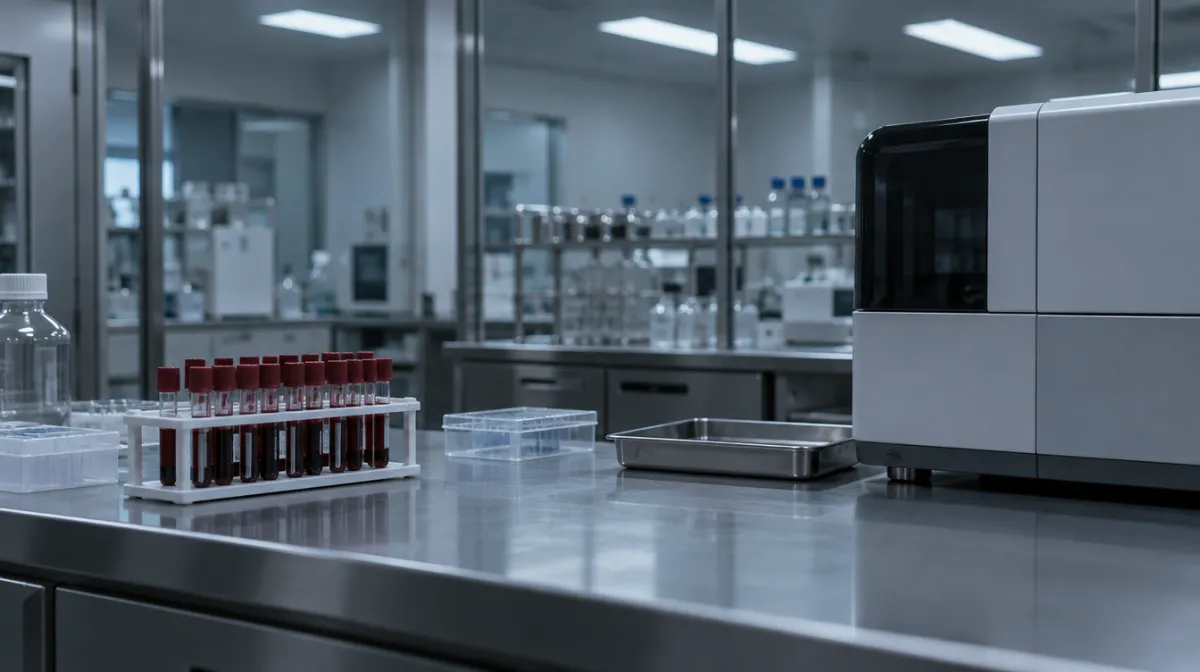
Theranos promised to revolutionize medicine: hundreds of blood tests from a single finger-prick, cheaply and quickly, at your local pharmacy. At its peak, the Silicon Valley startup was valued at about $9 billion, and its founder, Elizabeth Holmes, was celebrated as the youngest self-made female billionaire. The technology didn’t work. The collapse became one of the most famous corporate frauds of the century.
Holmes founded Theranos in 2003, after leaving Stanford University at 19. The company said its compact device, eventually called the Edison, could run a wide range of tests on a tiny blood sample. Holmes, dressed in her trademark black turtleneck, gave charismatic interviews and assembled a board filled with famous names, many from politics and the military rather than medicine.
In 2013, Theranos began offering tests to the public through wellness centers in Walgreens pharmacies.
Behind the scenes, the Edison devices were unreliable. According to later evidence, Theranos ran many tests on modified commercial machines made by other companies, diluting small samples to make them work. Some patients received inaccurate results. Staff who raised concerns were pressured, and the company used strict secrecy and aggressive legal tactics.
| Date | Event |
|---|---|
| 2014 | Theranos is valued at about $9 billion |
| October 2015 | The Wall Street Journal’s John Carreyrou reports that the technology doesn’t work as claimed |
| 2016 | Regulators find serious lab problems; Holmes is barred from operating a lab for two years; Walgreens ends its partnership |
| March 2018 | The SEC charges Holmes and Balwani with fraud; Holmes settles without admitting wrongdoing |
| June 2018 | Holmes and Balwani are indicted on criminal fraud charges |
| September 2018 | Theranos dissolves |
| January 2022 | A jury convicts Holmes on four counts of defrauding investors |
| July 2022 | Balwani is convicted on all 12 counts |
Whistleblowers, including former employees Tyler Shultz and Erika Cheung, played a key role in exposing the problems.
Holmes was acquitted on charges related to defrauding patients, and the jury couldn’t reach a verdict on some others, but she was convicted of defrauding investors. She was sentenced to more than 11 years in prison and began serving her sentence in 2023. Balwani received a sentence of nearly 13 years.
Theranos became a warning about Silicon Valley’s “fake it till you make it” culture being applied to health care, where false results can harm patients. It also highlighted weaknesses in oversight: a board without relevant expertise, investors who didn’t demand independent evidence, and gaps in how lab tests are regulated.
Like Enron, Theranos shows how a compelling story can outrun reality. By contrast, the 1982 Tylenol crisis is remembered for a company telling the public the truth quickly.
Not as promised. The company’s own device couldn’t reliably perform most of the tests it advertised, and many were run on other manufacturers’ machines.
Some patients received inaccurate results, and many test results were later voided. Holmes was not convicted on the patient-related charges.
She reported to Federal Prison Camp Bryan in Texas in May 2023. In March 2026, a federal judge cut her sentence from 135 to 123 months under a retroactive change to the sentencing guidelines, and the Bureau of Prisons lists her release date as February 22, 2030. In September 2026, news reports said she had been approved to move to a halfway house in August 2027 and that her request for a presidential commutation was still pending. Dates can change, so check the Bureau of Prisons inmate locator for the latest.

Every article is edited by a human and checked against our editorial policy. Spotted a mistake? Tell us.
In 1985 Coca-Cola replaced its 99-year-old formula and faced a revolt. The story of New Coke: the Pepsi Challenge, the taste tests and the 79-day U-turn.
Was 1630s tulip mania a mad bubble that ruined the Dutch economy? What happened in 1636–37, where the famous stories came from and what historians found.
In 1912 a skull from an English gravel pit was hailed as a missing link. In 1953 it was exposed as a forgery. How Piltdown Man fooled experts, and who did it.