The Enron Scandal Explained
How Enron went from Fortune’s most innovative company to bankruptcy in 2001: the accounting tricks, the hidden debt, the collapse and the trials that followed.

How secret oil leases and hidden payments in the Harding administration became the Teapot Dome scandal, and how a cabinet secretary ended up in prison.
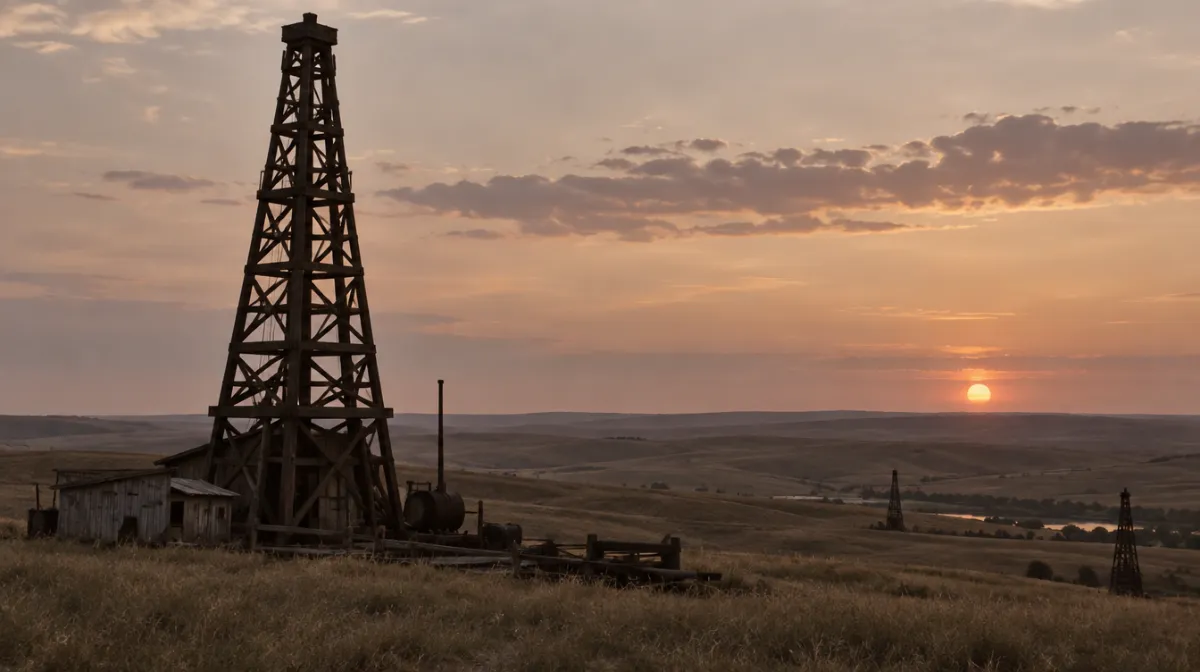
Before Watergate, the byword for government corruption in the United States was Teapot Dome. Named after an oil field in Wyoming, where a rock formation looks like a teapot, the scandal exposed bribery at the top of President Warren G. Harding’s administration in the early 1920s.
In the early 20th century, the US Navy was switching its ships from coal to oil. To guarantee fuel in a national emergency, the government set aside oil-rich public land as naval petroleum reserves, including Teapot Dome in Wyoming and Elk Hills in California.
In 1921, soon after Harding took office, control of the reserves was transferred from the Navy to the Department of the Interior, led by Albert B. Fall, a former senator from New Mexico. In 1922, Fall leased drilling rights without competitive bidding:
Fall argued the leases were in the Navy’s interest. But around the same time, his own finances visibly improved, and neighbors noticed expensive upgrades to his New Mexico ranch.
| Date | Event |
|---|---|
| 1921 | The naval oil reserves are transferred to the Interior Department |
| 1922 | Fall leases Teapot Dome and Elk Hills without competitive bidding |
| 1923 | Fall resigns; Harding dies in August, before the scandal fully breaks |
| 1923–1924 | A Senate committee, driven by Senator Thomas Walsh, uncovers payments to Fall |
| 1927 | The Supreme Court invalidates the leases |
| 1929 | Fall is convicted of accepting a bribe |
The Senate investigation revealed that Doheny had sent Fall $100,000 in cash, delivered in a small bag, which Doheny described as a loan to an old friend. Sinclair had given Fall cash, bonds and livestock. Together, the payments were worth hundreds of thousands of dollars.
The outcomes were strikingly uneven:
Teapot Dome strengthened Congress’s investigative powers: a related Supreme Court case in 1927 confirmed that Congress could compel witnesses to testify. It also left a lasting stain on the Harding administration, already troubled by other scandals among the president’s associates.
The era produced more than one scandal: the fixing of the 1919 World Series came to light in the same years. And Teapot Dome was America’s benchmark for political scandal until Watergate.
The Wyoming oil field was named after a nearby rock formation that resembled a teapot.
There’s no evidence Harding took bribes. He died in 1923, before the full scandal emerged, but it badly damaged his reputation.
The Supreme Court canceled the leases in 1927, and the reserves were returned to government control.

Every article is edited by a human and checked against our editorial policy. Spotted a mistake? Tell us.
How Enron went from Fortune’s most innovative company to bankruptcy in 2001: the accounting tricks, the hidden debt, the collapse and the trials that followed.
How eight Chicago White Sox players conspired with gamblers to lose the 1919 World Series, why they were acquitted and still banned from baseball for life.
In 1982, seven people near Chicago died after taking cyanide-laced Tylenol. What happened, how Johnson & Johnson responded and why the case remains unsolved.