The Enron Scandal Explained
How Enron went from Fortune’s most innovative company to bankruptcy in 2001: the accounting tricks, the hidden debt, the collapse and the trials that followed.

How Captain Alfred Dreyfus was wrongly convicted of treason in 1894, how forged evidence and antisemitism kept him imprisoned and how he was finally cleared.
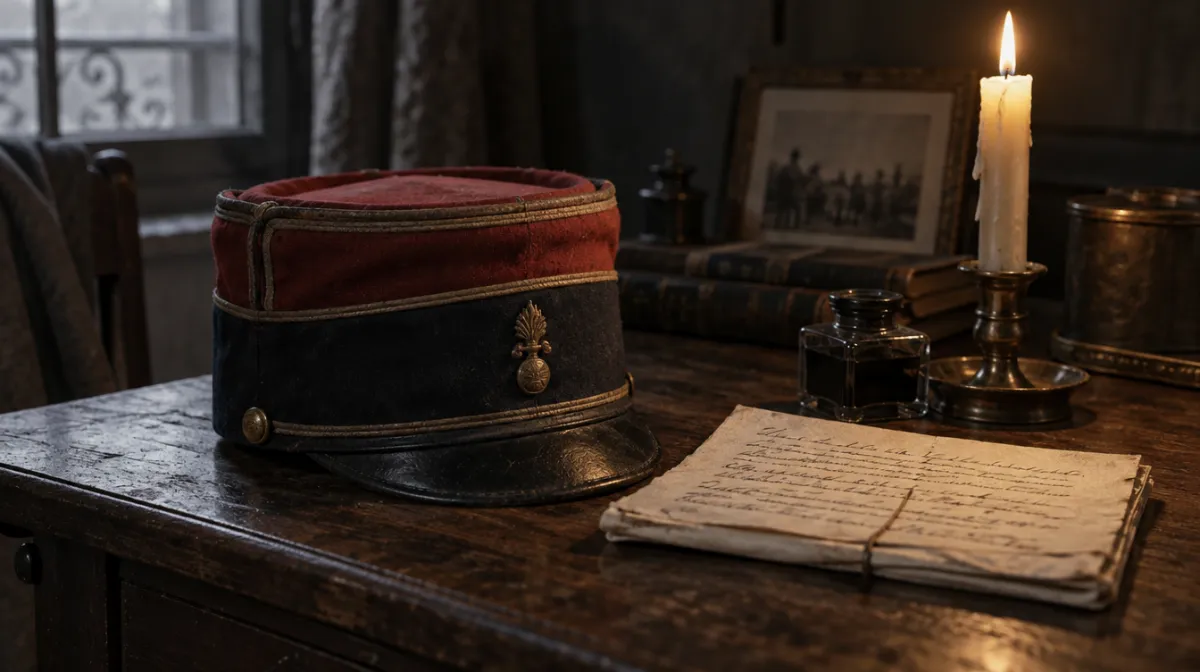
The Dreyfus Affair began with a scrap of paper and grew into a political crisis that split France for more than a decade. At its heart was a Jewish army officer convicted of a crime he didn’t commit, and an institution that chose to protect itself rather than admit its mistake.
In 1894, French military intelligence obtained a torn, handwritten memo, known as the bordereau, from the German embassy in Paris. It listed French military information being offered to Germany. Suspicion fell on Captain Alfred Dreyfus, an artillery officer on the General Staff, partly because of his background: he was Jewish, from Alsace, in an army where antisemitism was widespread.
The handwriting evidence was disputed, but Dreyfus was convicted by a closed court-martial in December 1894, aided by a secret file of documents shown to the judges but not to his defense. In January 1895, he was publicly stripped of his rank, his sword broken, as crowds shouted insults. He was sent to solitary confinement on Devil’s Island off French Guiana.
| Date | Event |
|---|---|
| December 1894 | Dreyfus is convicted of treason |
| 1896 | Intelligence chief Georges Picquart identifies Major Ferdinand Esterhazy as the real author of the bordereau |
| January 1898 | A military court acquits Esterhazy |
| January 13, 1898 | Émile Zola publishes “J’Accuse…!” |
| August 1898 | Major Hubert-Joseph Henry confesses to forging evidence and dies in custody |
| September 1899 | A second court-martial convicts Dreyfus again; he is pardoned days later |
| July 1906 | France’s highest court annuls the verdict; Dreyfus is reinstated |
When Lieutenant Colonel Georges Picquart found evidence pointing to Esterhazy, his superiors moved him to a posting in North Africa. Meanwhile, officers added forged documents to the file against Dreyfus. Esterhazy was tried and swiftly acquitted.
Two days after Esterhazy’s acquittal, the novelist Émile Zola published an open letter to the president of France in the newspaper L’Aurore, headlined “J’Accuse…!” (“I Accuse…!”). He named the officers he held responsible for the injustice. Zola was convicted of libel and fled to England, but his letter turned the case into an international cause.
France split into Dreyfusards, who demanded justice and the truth, and anti-Dreyfusards, who argued that the honor of the army and the nation came first. The affair divided families and friends, fueled antisemitic riots and newspapers, and reshaped French politics.
After Major Henry admitted forging evidence, a second court-martial in 1899 still found Dreyfus guilty, “with extenuating circumstances.” He accepted a presidential pardon to end his imprisonment, but kept fighting to clear his name. In 1906, France’s highest appeals court annulled the verdict. Dreyfus was reinstated, promoted and awarded the Legion of Honor. He later served in the First World War and died in 1935.
The affair became a lasting symbol of injustice, antisemitism and the duty of individuals to speak out. It also showed how an institution’s refusal to admit an error can turn a mistake into a scandal, a pattern seen again in cover-ups such as Watergate. Forged documents played a central part, as they did in the Hitler diaries hoax decades later.
No. After his acquittal, he fled to England, where he lived for the rest of his life.
Admitting the error would have exposed the misconduct of senior officers and, many believed, damaged the army’s authority.
Picquart was imprisoned for a time for his role, but he was vindicated in 1906 and later became France’s minister of war.

Every article is edited by a human and checked against our editorial policy. Spotted a mistake? Tell us.
How Enron went from Fortune’s most innovative company to bankruptcy in 2001: the accounting tricks, the hidden debt, the collapse and the trials that followed.
How eight Chicago White Sox players conspired with gamblers to lose the 1919 World Series, why they were acquitted and still banned from baseball for life.
In 1982, seven people near Chicago died after taking cyanide-laced Tylenol. What happened, how Johnson & Johnson responded and why the case remains unsolved.