Tulip Mania: Myth vs Reality
Was 1630s tulip mania a mad bubble that ruined the Dutch economy? What happened in 1636–37, where the famous stories came from and what historians found.

In 1985 Coca-Cola replaced its 99-year-old formula and faced a revolt. The story of New Coke: the Pepsi Challenge, the taste tests and the 79-day U-turn.
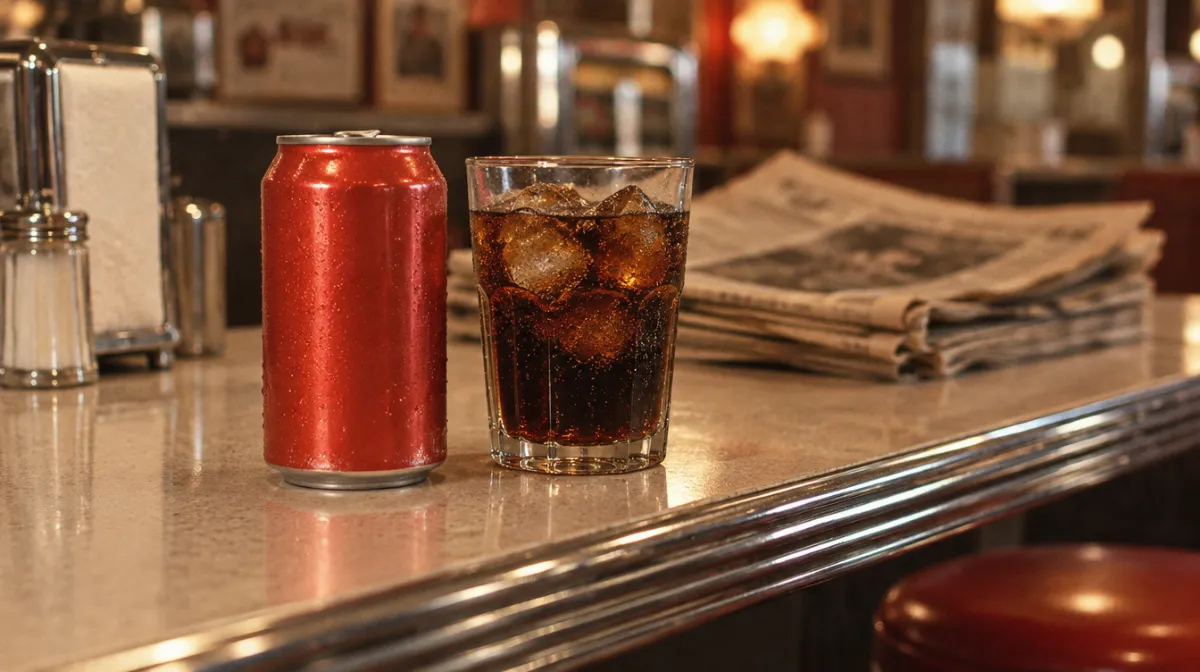
On April 23, 1985, the Coca-Cola Company did something that still sounds unthinkable: it retired the formula behind the most famous drink in the world and replaced it with a new one. Within three months, after a storm of public anger, the company brought the original back.
New Coke is now the textbook example of a business blunder. The real story is more interesting than “a big company made a silly mistake”, because on paper, Coca-Cola did almost everything right.
By the early 1980s, Coca-Cola had a slow-burning crisis. Its share of the US soft-drink market had been slipping for years, while Pepsi kept gaining, especially with younger drinkers.
Pepsi’s sharpest weapon was the Pepsi Challenge, a marketing campaign built on blind taste tests. Shoppers sipped two unlabeled colas and picked a favorite, and on camera, many picked Pepsi. For a company whose identity rested on being “the real thing”, it was an uncomfortable message.
Coca-Cola’s answer was a secret project to develop a new formula. The company says it ran around 200,000 taste tests. The result was a smoother, sweeter recipe that beat both the original Coke and Pepsi in blind tests.
The data looked conclusive. Executives, led by chief executive Roberto Goizueta, decided not to add the new drink alongside the old one, which they feared would split sales, but to replace the original entirely.
The new Coke was unveiled at a press conference in New York. The original formula, in use since the 1880s, would disappear from shelves.
Reaction was immediate, and it was not about taste. Many people had not even tried the new drink before deciding they hated the idea of it.
Coca-Cola’s consumer lines were flooded with angry calls and letters. Some people stockpiled cases of the original. In Seattle, a man named Gay Mullins organized a protest group, the Old Cola Drinkers of America, and campaigned for the old formula’s return.
What the company had underestimated was attachment. People didn’t just drink Coke; it was part of childhood memories, family rituals and a sense of American identity. Changing it felt, to many customers, like having something taken away without being asked.
On July 11, 1985, just 79 days after the launch, Coca-Cola announced that the original formula would return as Coca-Cola Classic. The news was big enough that ABC News interrupted its afternoon programming to report it.
Company president Donald Keough addressed the inevitable suspicion that the whole thing had been planned: “We are not that dumb, and we are not that smart.”
Two theories have followed New Coke ever since.
The marketing ploy theory says Coca-Cola staged the whole affair to remind Americans how much they loved the original. There is no evidence for this, and it would have been an extraordinarily risky way to run a company. Deliberate stunts do happen (the Great Moon Hoax of 1835 sold a lot of newspapers), but they rarely put a company’s main product on the line. Classic’s strong sales afterwards were a happy accident, not proof of a plan.
The corn syrup theory says the switch was cover for replacing cane sugar with cheaper high-fructose corn syrup. The timeline doesn’t fit: US bottlers had already been moving to corn syrup before 1985.
Coca-Cola Classic quickly outsold its replacement. New Coke hung on in smaller numbers, was renamed Coke II in 1990 and faded away in the US in the early 2000s. It made a brief, nostalgic return in 2019 as a tie-in with the Netflix series Stranger Things, set in 1985.
The original formula returned as Coca-Cola Classic 79 days after New Coke launched, announced on July 11, 1985.
In blind taste tests, many did. Outside the test setting, emotional attachment to the original mattered more than the taste difference.
Not as a regular product. It was renamed Coke II in 1990, later discontinued, and briefly revived as a limited edition in 2019.

Every article is edited by a human and checked against our editorial policy. Spotted a mistake? Tell us.
Was 1630s tulip mania a mad bubble that ruined the Dutch economy? What happened in 1636–37, where the famous stories came from and what historians found.
How Elizabeth Holmes built Theranos into a $9 billion company on the promise of finger-prick blood tests, how the truth came out and what the trials decided.
In 1912 a skull from an English gravel pit was hailed as a missing link. In 1953 it was exposed as a forgery. How Piltdown Man fooled experts, and who did it.